
When my name got called, my legs went numb. I walked up anyway, clutching my guitar like it was a life jacket. A few people whispered, a few stared, but mostly the room just waited.
I swallowed and played.
The first song was soft—the kind you don’t belt, you confess. My voice wobbled on the first line, and I almost stopped. But then I remembered that kitchen table, my birthday, my mother saying she couldn’t risk upsetting Lily, and the sound in my chest turned into something steadier.
I sang about being the easy one. The quiet one. The one people forget because she never makes them uncomfortable.
When I finished, there was a pause—one long second where I thought I’d embarrassed myself in front of the whole town. Then someone started clapping. Then more hands joined in. Greg grinned like he’d been right all along.
Afterward, a woman with silver hair came up to the counter while I was putting my guitar back in its case.
“That was beautiful,” she said. “What’s your name, honey?”
“Mia,” I answered, still dizzy.
“I’m Marlene,” she said, lowering her voice. “I had a sister like that. Everyone danced around her storms. I spent years thinking I was selfish for wanting sunshine.”
I didn’t know what to say, so I just nodded.
Marlene touched my arm lightly. “Don’t go back to being quiet just because they’re finally hearing the noise,” she said. “Let them be uncomfortable. It won’t kill them. But shrinking might kill you.”
She walked out into the night, and I stood there behind the counter, shaking, not from fear this time, but from the strange power of being seen.
After that, my clips didn’t just get likes. They got messages—real ones. People telling me their stories. People telling me to keep going. And every time my phone buzzed, it felt less like a distraction and more like proof that my voice could exist outside my family’s orbit.
Then the tone of the messages shifted.
“Mia, this isn’t funny. Where are you?”
“You can’t just disappear like this.”
A missed call from my dad.
Ten missed calls from my mom.
A long message from my sister.
So, you ran away because you didn’t get a party?
Are you seriously that dramatic?
That one made me laugh—short, bitter, but real.
I took a screenshot, not to expose her yet, but to remember how quickly the narrative could flip. The girl who cried her way into canceling my birthday was now accusing me of being dramatic. Somehow I was always the problem as long as I wasn’t quietly useful.
One night, as I sat on the back steps of the cafe with my grandparents, my grandpa said something that cemented everything.
“You know,” he murmured, sipping his coffee, “sometimes the kindest thing you can do for people who take you for granted is to let them feel what life is like without your support. Not to destroy them, but to wake them up.”
I realized then my leaving wasn’t just an escape. It was the beginning of a lesson my family had avoided learning for years.
The question was: how far would things have to fall before they finally understood?
It didn’t take long for things to start cracking.
News travels fast in our town, and faster in our family.
One afternoon, while I was wiping down tables during a slow hour, our neighbor Susan walked in looking unusually tense. She ordered a coffee, then leaned across the counter.
“Mia, your mom is losing it,” she whispered. “Your sister’s been acting out like crazy—screaming matches, throwing things, skipping school. Your dad left for work this morning with a suitcase. I’m not sure if he’s coming back tonight.”
For a second, my stomach dropped. Not because I was surprised, but because it confirmed exactly what I’d suspected. I had been the quiet glue holding things together. Remove the glue, and everything starts sliding out of place.
“I’m fine,” I told Susan when she probed if I was okay. “I just needed some space.”
She sighed. “I get it. Honestly, maybe this is what they needed. Your mom’s starting to realize how much you did around that house. She told me she didn’t even know where half the important documents are because you always handled them.”
That stung and satisfied me at the same time.
Part of me wanted to rush home, fix everything, tuck the chaos back into neat little boxes so no one had to suffer. Another part of me—the part that remembered being told my birthday didn’t matter—sat back and thought, No. Let them sit in it. Let them see.
That night, my phone blew up.
“Mia, this has gone too far.”
“Your sister is spiraling and your dad and I are arguing non-stop.”
“We need you home,” my mom wrote.
Not we miss you.
Not we’re sorry.
Not even how are you?
Just we need you.
Like I was a tool they’d misplaced.
I typed three different responses and deleted them all. Finally, I wrote:
I’m safe. I’m working.
I needed to leave because I wasn’t being treated like a person with feelings. I’m not coming back to fix things.
I pressed send and immediately turned my phone over, heart pounding.
When I checked again, there were paragraphs of replies—accusations, guilt trips, attempts to twist the story.
You’re abandoning your family.
We’ve done everything for you.
Your sister is fragile. She can’t handle this.
But then, quietly, another message came in.
It was from my dad.
Mia, I’m sorry. I didn’t see it. I should have.
I stared at that text for a long time. Maybe he meant it. Maybe he was just scared. Either way, I didn’t fully trust it yet. I’d spent too long being the one expected to forgive quickly, to smooth it over, to move on so nobody else had to feel uncomfortable.
Meanwhile, my social media posts were gaining traction. I never mentioned my family by name, never revealed personal details, but my songs about being the invisible sibling—about birthdays that weren’t celebrated, about leaving home to save yourself—those resonated.
People commented things like, “My younger brother was the golden child. I felt this.”
And, “Sometimes going no contact is the only revenge you can safely take.”
One comment hit me hard:
The most powerful revenge is building a life that proves they were wrong about you.
Revenge.
I hadn’t used that word out loud yet, but it was starting to feel accurate.
I wasn’t breaking windows or exposing secrets to the world. I was letting the truth breathe. I was letting the consequences exist without rushing in to save everyone from them.
I showed my grandparents some of the comments one evening. My grandma squeezed my shoulder.
“They’re seeing you, Mia,” she said softly, “even if your own family took too long.”
My grandpa, though, had a different angle.
“You know this won’t end with texts,” he warned. “Eventually they’re going to push for a big conversation. They won’t let this go quietly. Are you ready for that?”
I wasn’t. Not fully.
But I knew running forever wasn’t an option either. If I wanted real change—if I wanted real revenge, the kind that forces people to face themselves—I’d have to walk back into that house one day. Not as the girl they could guilt into silence, but as the woman who could look them in the eye and say, “I know exactly what you did, and I’m not playing that role anymore.”
The question was, when that moment came, would I let them apologize, or would I finally make them feel the full weight of what they’d done?
The breaking point came on a rainy evening, the kind where the sky looks like it’s carrying everyone’s secrets. I was closing the cafe when my phone rang again. This time, it wasn’t my mom or my sister.
It was my grandpa.
“Mia,” he said, his voice unusually serious. “Your parents came by the house today.”
My heart jumped. “What did they say?”
“Your mom is shaken. Your sister had another meltdown. Apparently, she’s been telling people at school that you’re selfish, that you abandon them for attention. Your mom wanted us to talk some sense into you, to convince you to come home and help them get back to normal.”
I could practically hear the air quotes around normal.
I laughed bitterly. Of course. Back to normal means back to me absorbing everything so no one else has to change.
“That’s what I told her,” he said calmly. “Your grandma and I made something clear today. We’re not going to help them drag you back into the same role you had before. If there’s going to be a conversation, it needs to be on your terms.”
That was new.
That felt like backup.
For once, someone older than me wasn’t asking me to be the bigger person just to keep the peace.
“What did she say?” I asked.
“She cried,” he admitted. “She said she feels like she’s losing both her daughters and her marriage. Your dad didn’t say much. But before they left, your mom asked us to at least try to arrange a meeting. She wants to talk. She says she wants to understand.”
I’d heard that word before, usually followed by explanations about my sister’s conditions and emotional needs.
But this time, I had leverage.
I had distance.
I had proof.
“Okay,” I said slowly. “I’ll meet them. But not at the house—at your place—and I’m not coming alone, emotionally or otherwise.”
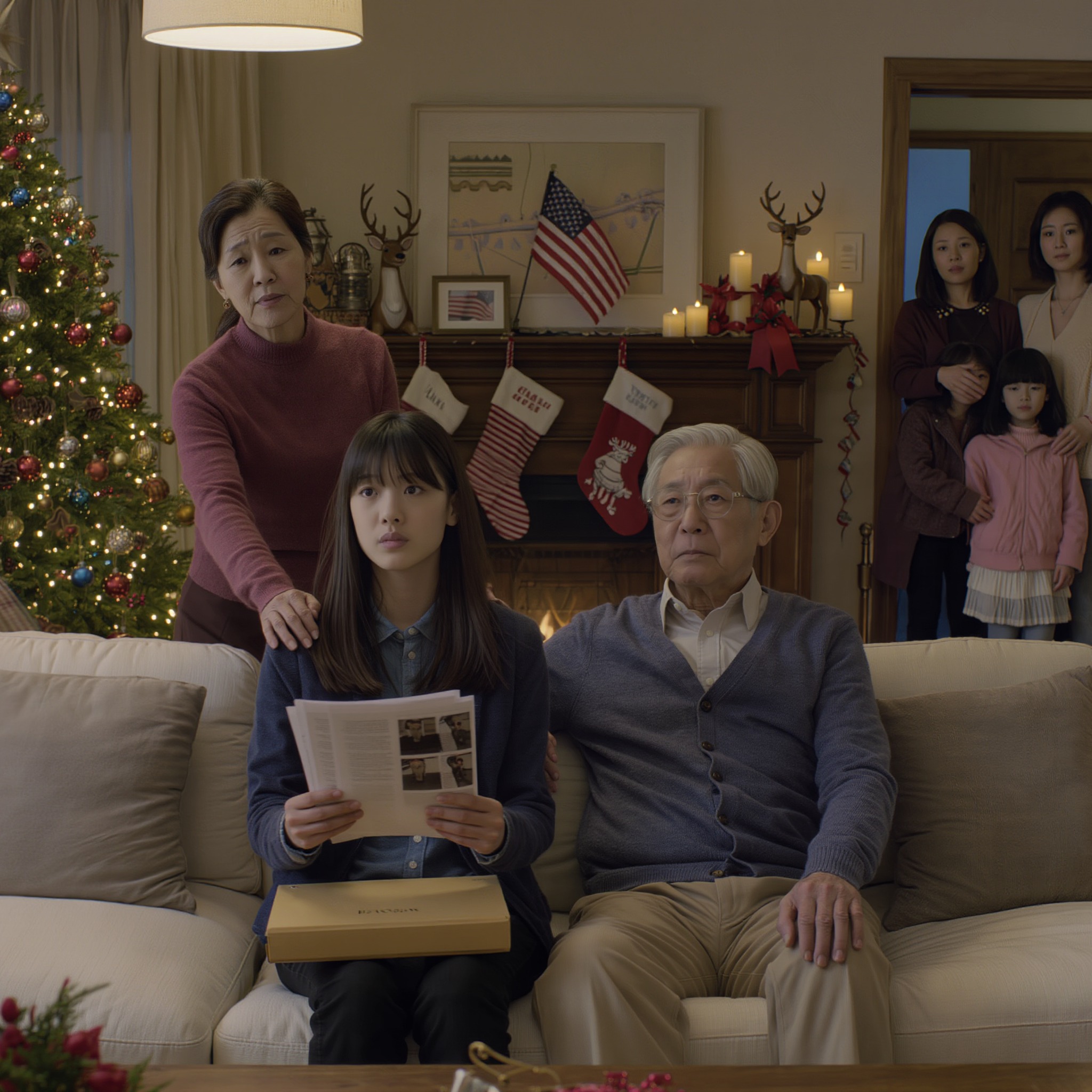
Over the next few days, I prepared, not like a scared kid waiting for a scolding, but like someone building a case. I printed out screenshots of messages where my needs were brushed off to cater to my sister. I organized notes of specific memories—birthdays overshadowed, achievements ignored, apologies that never came. I went through my camera roll and found photos where I was standing at the edge of the frame while Lily took center, and it hit me how long I’d been trained to disappear.
I even dug up an audio recording I’d accidentally captured once: my sister bragging to a friend on a call, saying, “If I cry long enough, Mom cancels anything for me. She doesn’t care who she hurts as long as I calm down.”
The anger that had simmered in me for years sharpened into something clear and cold.
This wasn’t just about feelings. This was about patterns of manipulation that everyone had excused in the name of keeping peace.
And I was done being the sacrificial lamb for that peace.
I played the recording for my grandparents in their living room. My grandma covered her mouth, tears welling in her eyes.
“We failed you,” she whispered. “We should have stepped in sooner.”
“You’re stepping in now,” I said. “That’s what matters.”
My grandpa’s eyes hardened with resolve.
“When they come, we will not let them talk over you, Mia. You will say what you need to say, and they will listen.”
Part of me was terrified. Confrontations in my family rarely ended well. They usually dissolved into tears—my mom’s, my sister’s—and a quiet expectation that I would comfort them, even if they were the ones who hurt me.
But this time, I had a different plan.
I wasn’t coming to soothe anyone.
I was coming to deliver truth.

Yo Make również polubił
Mój teść zażądał od nas 10 000 dolarów na „inwestycję w biznes”, ale stanowczo odmawiał powiedzenia, na co to miało być. Gdy odmówiłam, nazwał mnie chciwą. Mój mąż złapał walizkę i wyszedł z domu, żeby „dać mi nauczkę”… aż do dnia, w którym odkryłam prawdę stojącą za tymi pieniędzmi, a moi teściowie całkowicie zamilkli.
Jak poradzić sobie z tłustymi szafkami kuchennymi: przewodnik krok po kroku
Ale dlaczego program ECO w naszej pralce działa tak długo?
Sposób, w jaki korzystasz z torby, daje wskazówki na temat twojej postaci.