
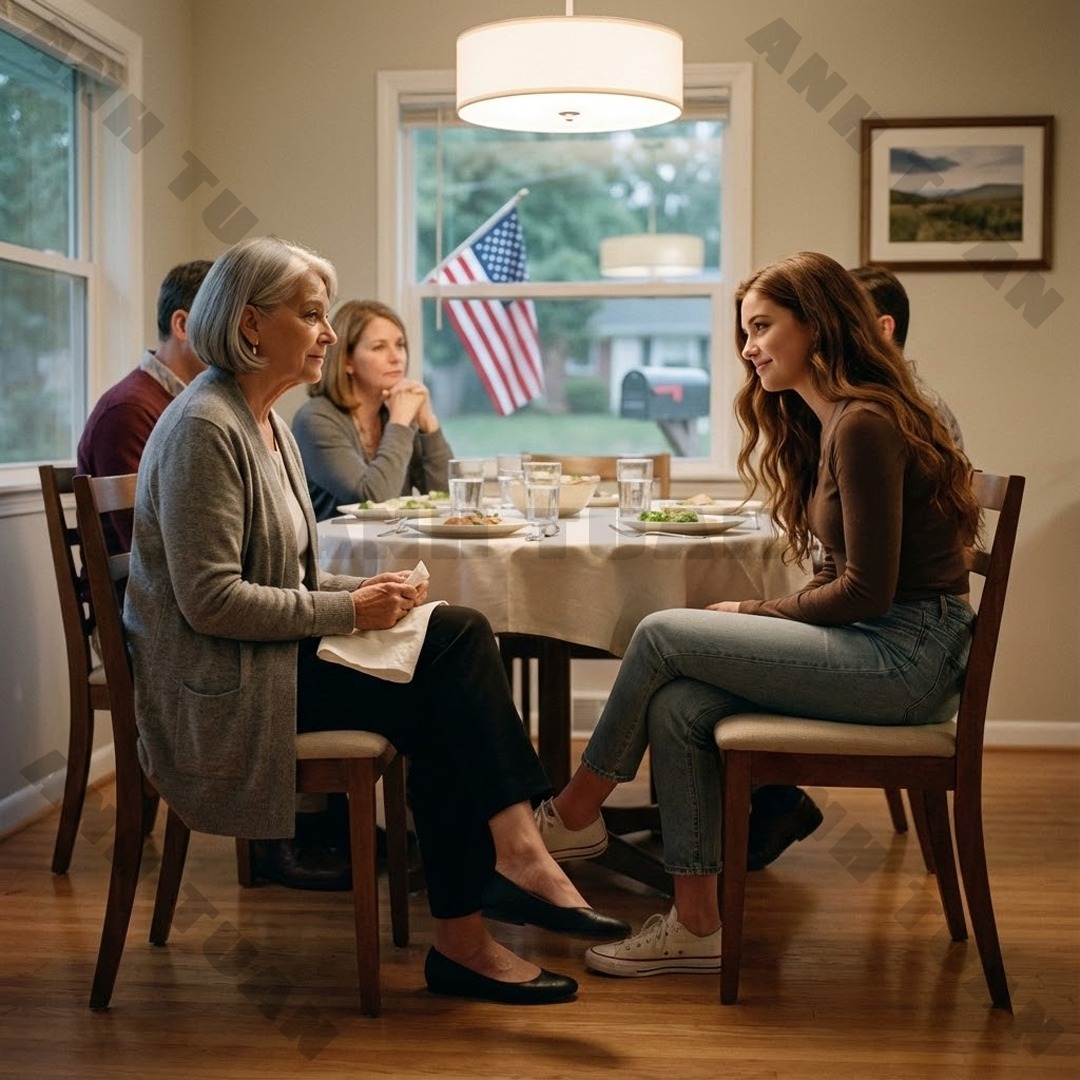
“I won’t stay long,” she said.
“You never do,” I replied, not unkindly.
Elaine stepped inside and looked around as though she hadn’t grown up in this house. Her eyes moved quickly, cataloging. The way she used to look when she was deciding what to keep and what to discard.
We sat across from each other at my table.
“Chloe’s managing,” Elaine said after a while.
“Yes,” I replied. “Responsibility does that.”
Elaine nodded slowly. “She doesn’t joke the same way anymore.”
“No,” I agreed. “She’s learning weight.”
Elaine looked at me then, really looked.
“You scared her,” she said, and there was accusation in it.
“I surprised her,” I replied. “I corrected.”
Elaine exhaled. “I still think you could have handled it differently.”
“I could have,” I said. “But then nothing would have changed.”
She had no answer for that.
Before leaving, she hesitated like she was standing at the edge of something she didn’t want to cross.
“You know,” she said, “people talk.”
I smiled. “They always have.”
“What do you tell them?” she asked.
“The truth,” I replied. “That I stopped paying for disrespect.”
Elaine pressed her lips together. She didn’t like the bluntness. She had always preferred narratives that made her look gentle.
She left shortly after, and when the door closed, I didn’t feel hollow. I felt steady.
The fifteenth day arrived like a Sunday should.
Quiet.
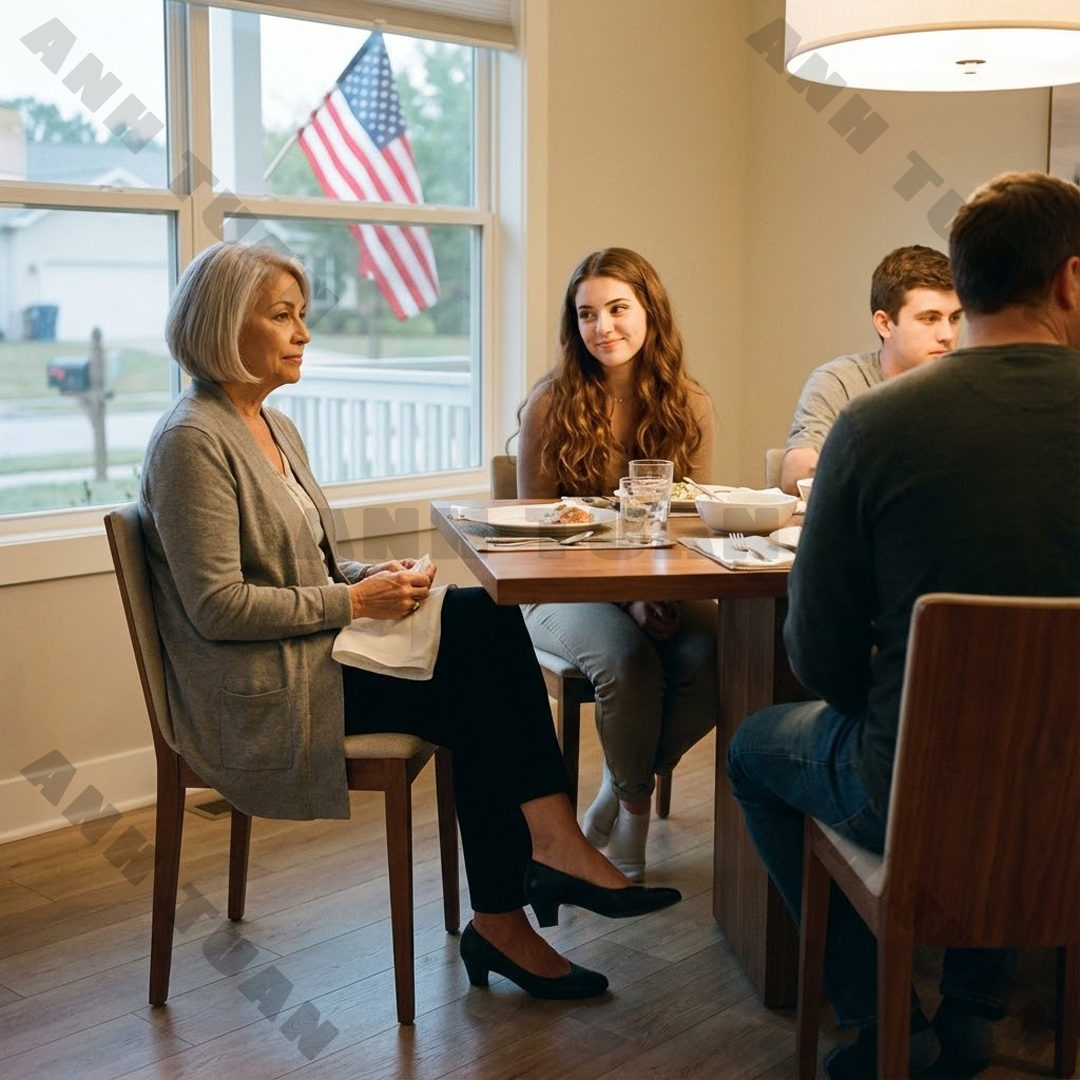
I woke later than usual and allowed myself to stay in bed for a few extra minutes, listening to the house breathe. No plans pressing in. No expectations waiting for my response. At seventy-two, that felt like a luxury I had finally earned.
I made coffee and sat by the window.
Outside, autumn had begun to show itself in small, honest ways. A few leaves on the sidewalk. Cooler air. Change without announcement.
Elaine called mid-morning. Not urgent. Not tentative. Just a call.
“We’re coming by next week,” she said. “If that’s okay.”
“With notice,” I replied, “yes.”
Elaine hesitated, then added, “Chloe asked if she could come too.”
I considered that.
Not long, I decided. Not enough time to pretend the past didn’t happen. Just enough time to see whether something new could exist without reopening what I had closed.
“She can,” I said. “If she comes as herself, not as a problem to be solved.”
Elaine exhaled, and I could hear the shift in her. She understood the line now.
“She will,” Elaine said quietly. “She’s different.”
“Yes,” I replied. “She is.”
After the call, I didn’t feel relief or tension. Just acceptance. Whatever that visit brought, it would not undo what had already been learned. Some lines, once drawn, remain visible even when crossed with care.
On the day they came, the sky was pale and bright.
I cleaned my kitchen not because I needed their approval, but because it was my house and I like it clean. I put fresh flowers in a small vase on the table. Not expensive ones. Grocery store daisies. Yellow and white. Honest.
At two o’clock, I saw Elaine’s car pull up.
Chloe got out first.
She stood for a second on my walkway as if she wasn’t sure where to put her hands. No phone. No sunglasses perched like a shield. She wore a plain coat, sensible, warm, not flashy. She looked older than she had at dinner, not in years, but in awareness.
Elaine followed, holding a pie box like an offering.
When I opened the door, Elaine started to speak, but Chloe’s voice came first.
“Hi, Grandma,” she said, and it was quiet.
“Hello, Chloe,” I replied.
She looked at my cardigan.
The same gray one. The same skirt. The same low black shoes.
Her eyes flickered, and for a moment I saw something pass through her face. Not humor. Not judgment. Recognition.
“I brought something,” Elaine said quickly, stepping forward with the pie as if pie could smooth a bruise.
“Thank you,” I replied, and stepped aside.
They entered slowly, both of them looking around in ways that felt cautious now, like they weren’t sure what version of me lived here. That uncertainty was the cost of their assumptions, and I didn’t rescue them from it.
We sat at my table. I poured coffee. I offered pie. Ordinary hospitality. Not forgiveness. Hospitality.
Chloe kept her hands folded in her lap for a long time, staring at the edge of the table like she was gathering words she wasn’t used to paying for.
Elaine tried first.
“Mom,” she began, her tone carefully gentle, “we’ve all been under a lot of stress and—”
“Elaine,” I said calmly.
She stopped.
Chloe looked up then, as if my interruption had given her permission to exist in the room without her mother narrating it.
“I need to say something,” Chloe said, and her voice trembled slightly, not with drama, with effort.
I nodded once.
Chloe swallowed. “I was cruel,” she said. “And I acted like it didn’t matter because it was… easy. Because you’ve always been steady, and I thought that meant nothing could move.”
Elaine shifted, uncomfortable. Chloe didn’t look at her.
“I joked,” Chloe continued, “but it wasn’t a joke. I was showing off. I wanted everyone to laugh with me, and I didn’t care what it cost you.”
She stopped and breathed.
“I’m sorry,” she said again, and this time it didn’t sound like a wish. It sounded like ownership.
I watched her face carefully. Older women get accused of holding grudges when we are really just verifying sincerity. We have lived too long to mistake performance for change.
“I hear you,” I said.
Chloe’s eyes filled, but she blinked and held herself together. That mattered too.
“I don’t expect you to fix it,” she whispered. “I… I’m working. I’m figuring out loans. I’m learning. And I hate that it took hurting you for me to learn.”
Elaine made a small sound, half sigh, half protest, but she didn’t interrupt. That was new.
I set my coffee cup down slowly.
“Chloe,” I said, “I’m glad you’re learning. Truly.”
Chloe nodded, tears slipping now, but she didn’t wipe them dramatically. She let them exist, like consequences.
“But the fund stays closed,” I continued, my tone even. “Not because I want you to suffer. Because I want you to grow up with something more valuable than money.”
Chloe’s shoulders dropped slightly, not in defeat, in acceptance. That alone told me the shift was real. Entitlement argues. Growth absorbs.
Elaine tried again.
“So… what does this mean?” she asked, and her voice was smaller now. “Are we… are we okay?”
I looked at my daughter. My only daughter. The child I raised with tired hands and careful choices. The woman who had learned to call my steadiness “controlling” because it embarrassed her to admit how much she relied on it.
“It means,” I said, “we move forward differently. If you want me in your life, you treat me like a person, not a resource.”
Elaine’s eyes flickered. She didn’t like the word resource. It sounded like what it was.
“And Chloe,” I added, turning slightly, “if you want me in your life, you show me that you know what respect looks like when it doesn’t benefit you.”
Chloe nodded hard. “I will,” she said.
Elaine’s mouth tightened again, and I could see her wanting to bargain, wanting to soften this into something more comfortable. But she didn’t. Maybe she couldn’t. Maybe she was finally realizing comfort had been paid for with my silence.
We sat in quiet for a moment. Not tense. Just real.
Then Chloe did something I didn’t expect.
She reached into her bag and pulled out an envelope.
“I wrote you something,” she said. “Not a text. An actual letter. Because… because you deserved more than a message typed in a hurry.”
She placed it on the table, not sliding it like a demand, just setting it down like a gift.
I didn’t open it right away. I didn’t need to perform emotion for them.
“I’ll read it,” I said.
Chloe nodded. Her eyes stayed on my face, not watching for approval, watching for truth.
Elaine looked like she wanted to cry, but she held herself together, and that, too, was a kind of learning.
We spoke for another hour.
Not about money.
About practical things. Chloe’s class schedule. Her job hours. Which textbooks were required and which were optional. Loans. Budgeting. The reality of adulthood when no one cushions the fall.
At one point, Chloe laughed at something I said.
It wasn’t a sharp laugh. It wasn’t permission to be cruel. It was genuine, quick, warm, and when it ended, she looked at me as if checking whether she had stepped wrong.
I smiled faintly.
“It’s okay to laugh,” I told her. “It’s not okay to laugh at someone’s dignity.”
Chloe nodded. “I know,” she said.
Elaine stared at her hands for a long time, then finally spoke, softer than I’d heard her in weeks.
“I didn’t stop her,” Elaine admitted. “At dinner. I didn’t stop her.”
I didn’t rush to comfort her. I didn’t hand her forgiveness like a towel.
“I know,” I replied.
Elaine poruszyła się, przełykając ślinę. „Myślałam… Myślałam, że to nieszkodliwe. I nie chciałam, żeby było niezręcznie”.
Spojrzałam na moją córkę, dorosłą kobietę, która przez wiele lat stawiała gładkość ponad przyzwoitość.
„Niezręczność” – powiedziałem – „jest tańsza niż brak szacunku”.
Oczy Elaine zaszkliły się. Skinęła głową, jakby nie mogła zaprzeczyć tak oczywistej prawdzie.
Kiedy wstali, żeby wyjść, Elaine mnie przytuliła.
Nie ciasno. Nie dramatycznie. Po prostu uścisk, który wydawał się delikatny, jakby uczyła się, gdzie leżą moje granice i starała się ich nie naruszać.
Chloe również mnie przytuliła, a jej ramiona były cieplejsze, niż się spodziewałem, nie z desperacji, lecz ze szczerości.
Zawahała się, stojąc w drzwiach.
„Babciu” – powiedziała – „nie proszę cię, żebyś cokolwiek otwierała. Po prostu… mam nadzieję, że nadal będziesz ze mną rozmawiać”.
„Zrobię to” – odpowiedziałem. „Jeśli będziesz się tak dalej pojawiać”.
Chloe skinęła głową i po raz pierwszy od dawna zobaczyłem, jak patrzy na mnie tak, jak dzieci powinny patrzeć na starszych, kiedy starsi na to zasłużyli. Nie strachem. Nie uwielbieniem. Szacunkiem.
Po ich wyjściu, przez chwilę stałem w cichym korytarzu.
Dom wyglądał tak, jak zawsze – stara lampa, wytarty dywan, oprawione zdjęcia, ale coś w powietrzu się zmieniło. Nie dlatego, że przeprosili. Przeprosiny są łatwe. Bo natknęli się na linię, która się nie poruszyła, a świat się nie skończył. Musieli się dostosować.
Wróciłem do kuchni i wziąłem list od Chloe.
Otworzyłem ją powoli.
Jej pismo miejscami było nierówne, miejscami pospieszne, ale słowa były szczere. Pisała o kolacji, o zażenowaniu, o tym, jak nauczyła się oceniać ludzi po tym, co imponujące, i jak nigdy nie zdawała sobie sprawy, jak bardzo ją to obrzydza. Pisała, że uczy się, ile kosztują rzeczy. Nie tylko pieniądze. Duma. Czas. Relacje. Godność.
Pod koniec napisała zdanie, które miało większy ciężar niż pozostałe.
Myślałem, że zawsze będziesz tam, tak jak zawsze jest mur. Nie zdawałem sobie sprawy, że mury ktoś buduje i że ktoś może przestać budować.
Długo wpatrywałem się w tę linię.
Następnie złożyłem list i umieściłem go w szufladzie biurka, obok notatnika.
Tego wieczoru zrobiłem herbatę i usiadłem przy oknie.
Latarnie uliczne zapalały się jedna po drugiej. Przejechał samochód. Gdzieś na końcu ulicy czyjś pies zaszczekał raz, a potem ucichł.
Zastanawiałem się, jak dziwne jest to, że przez lata martwiłem się, że stanę się niewidzialny, nieistotny, zbyt stary, by mieć znaczenie.
Okazało się, że nigdy nie byłem nieistotny.
Po prostu byłem zbyt dostępny.
Otworzyłem notatnik i przeczytałem wiersze jeszcze raz.
Nie popieram braku szacunku.
Szacunek zaczyna się tam, gdzie kończy się dostęp.
Miłość bez szacunku staje się obowiązkiem.
Granice nie są karą. Są instrukcjami.
Dystans nie jest przeciwieństwem miłości. Przeciwieństwem jest brak szacunku.
Nie dodałem nic więcej.
Niektóre lekcje nie wymagają podsumowań.
Przed pójściem spać stanąłem przed lustrem i przyjrzałem się sobie.
Ta sama kobieta patrzyła na niego. Starsza. Pomarszczona. Niezaprzeczalnie prawdziwa. Ale w jej oczach nie było już przeprosin, cichej prośby o tolerancję.
Po prostu obecność.
Nie zrujnowałem swojej rodziny. Poprawiłem swoje miejsce w niej.
Niczego nie odebrałem. Przestałem dawać ludziom, którzy mylili dostęp z poczuciem uprawnień.
I tym samym dałem mojej wnuczce coś, czego nie mógłby zapewnić żaden fundusz.
Powód do dorastania.
W moim wieku przestaje się mylić miłość z wytrwałością. Przestaje się mylić hojność z powinnością. Uczy się, że raz utraconego szacunku nie da się błagać.
Jest to wymagane.
A kiedy w końcu to zrozumiesz, cisza w twoim życiu przestanie brzmieć jak samotność.
Zaczyna brzmieć jak wolność.

Yo Make również polubił
Co Twoje Stopy Mogą Ci Powiedzieć O Twoim Zdrowiu: Na Co Należy Zwracać Uwagę, W Tym Problemy Z Wątrobą
Sycylijska cassata: przepis na tradycyjny deser
Naturalne sposoby na ból zęba
„Masz cukinię i ziemniaki? Wyczaruj ten prosty i przepyszny posiłek!”